

Will Gold Replace the US Dollar is no longer a fringe question debated only by economists or precious-metal enthusiasts.
In 2026, governments, institutional investors, central banks, and ordinary savers increasingly ask whether the global monetary system is quietly moving toward a new balance between fiat currencies and hard assets.
For decades, the US dollar dominated global trade, foreign reserves, energy markets, and cross-border finance.
But inflation shocks, geopolitical fragmentation, rising sovereign debt, sanctions, and record central bank gold buying revived a once-dismissed debate:
Could gold eventually weaken the dominance of the US dollar?
The short answer:
Probably not completely.
But historical data increasingly suggests the world may be moving toward a more diversified reserve system in which gold regains greater monetary importance alongside the dollar rather than fully replacing it. Central banks bought an estimated 244 tonnes of gold in Q1 2026 alone, underscoring how strategic gold accumulation remains amid geopolitical and monetary uncertainty.
Will Gold Replace the US Dollar in 2026?
Historically, the dollar became dominant because of:
- deep financial markets
- massive liquidity
- global trade settlement infrastructure
- military and geopolitical influence
- confidence in US institutions
Yet the environment in 2026 looks materially different from previous decades.
Several trends increasingly support arguments for gold regaining monetary relevance:
- de dollarization and gold accumulation
- record central bank gold buying
- inflation fears
- currency debasement concerns
- reserve diversification
- geopolitical fragmentation
The World Gold Council reported strong official-sector buying in Q1 2026, while reserve diversification incentives remain elevated because of geopolitical instability and financial-system uncertainty.
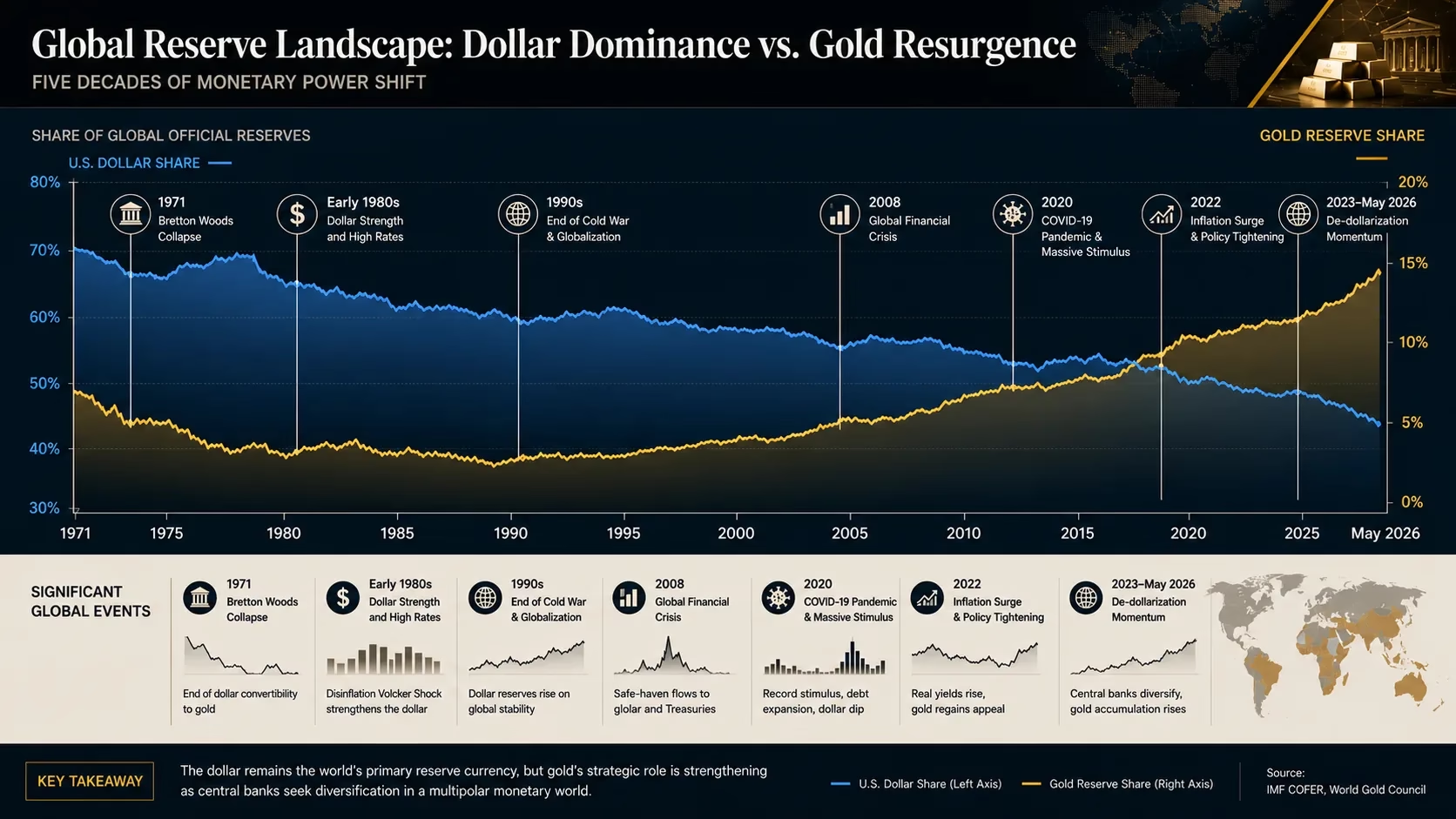
Since the end of Bretton Woods in 1971, the US dollar remained dominant, but gold increasingly regained reserve importance as central banks diversified holdings.
Gold vs Dollar: What 50 Years of Data Reveals
The story of gold vs dollar begins in 1971.
That year, President Richard Nixon suspended dollar convertibility into gold, effectively ending the Bretton Woods framework and ushering in the modern fiat-currency era.
Governments could now expand monetary supply without direct gold backing.
For decades, this system functioned relatively smoothly because global confidence in US financial markets remained exceptionally strong.
But history repeatedly showed something important:
gold regained attention during periods of declining trust in monetary systems.
Gold rallied during:
- the 1970s inflation crisis
- the 2008 Global Financial Crisis
- COVID-era money expansion
- the 2022–2026 inflation cycle
In practical terms, investors repeatedly turned toward gold when purchasing power, inflation, banking systems, or currency stability became major concerns.
Related: Every Financial Crisis Since 1970 — And What Happened to Gold
| Period | Dollar Trend | Gold Trend | Macro Environment |
|---|---|---|---|
| 1970s Inflation | Weakening purchasing power | Explosive rally | Stagflation and oil shocks |
| 2008 Crisis | Volatile | Strong recovery | Banking panic |
| COVID Era | Massive monetary expansion | Record highs | Stimulus and inflation fears |
| 2022–2026 | Reserve diversification concerns | Strong institutional demand | Inflation and geopolitics |
Why Central Bank Gold Buying Matters
One of the strongest arguments behind the phrase will gold replace the US dollar comes from official-sector behaviour itself.
Central banks continued accumulating gold aggressively into 2026.
According to the World Gold Council, official institutions added roughly 244 tonnes in Q1 2026, exceeding historical averages and remaining strategically important for reserve diversification. Poland, Uzbekistan, China, Kazakhstan, and others remained major buyers.
Countries increasingly value gold because it provides:
- monetary neutrality
- no foreign counterparty risk
- reserve diversification
- inflation protection
- geopolitical resilience
For many policymakers, gold increasingly functions as insurance against systemic uncertainty rather than a speculative trade.
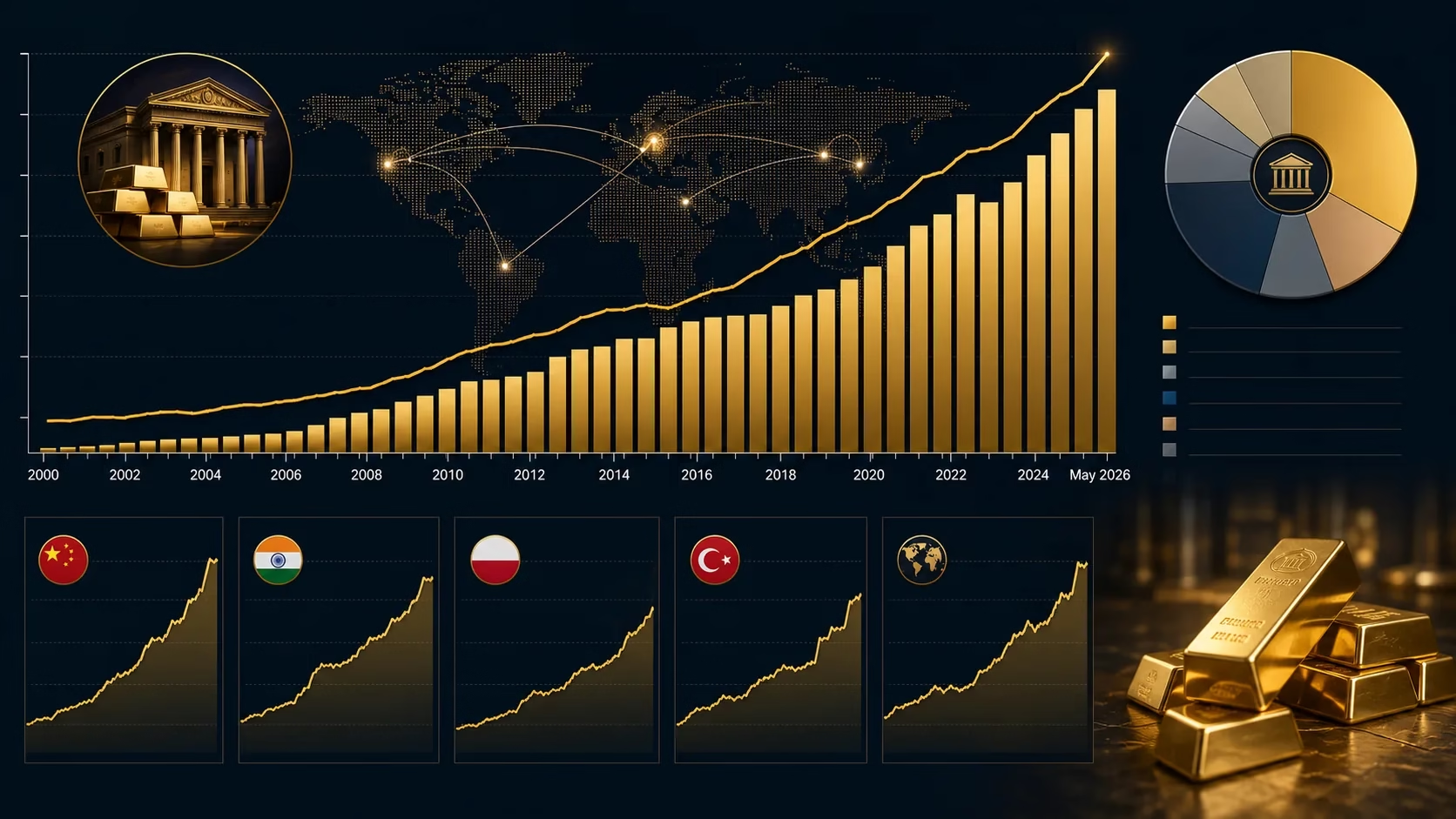
Central bank gold buying accelerated sharply after 2022 as reserve diversification and geopolitical concerns increased globally.
De Dollarization and Gold: Is the Monetary System Changing?
The phrase de dollarization and gold gained enormous attention following sanctions-related reserve freezes and rising geopolitical fragmentation.
Many countries increasingly questioned whether reserve assets concentrated in one currency created long-term vulnerabilities.
This does not mean governments suddenly abandon the dollar tomorrow.
Instead, many countries gradually diversify:
- settling some trade outside the dollar
- increasing local-currency agreements
- expanding gold reserves
- reducing concentrated reserve exposure
Countries including China, India, Russia, Brazil, Gulf states, and emerging economies increasingly explored alternatives to concentrated dollar dependency. Meanwhile, central banks globally continue increasing gold reserves as a neutral reserve asset.
For Indian investors, this trend feels familiar.
Indian households historically treated gold not simply as jewelry but as financial insurance — especially during inflation, currency weakness, and uncertainty.
In many middle-class families, gold ownership still represents psychological stability in uncertain periods.
Related: How Gold Protects Your Money From Inflation
Could Gold Become a Gold Reserve Currency Again?
Could a gold reserve currency emerge again?
Probably not in the strict historical sense.
Modern economies require flexible credit systems and large-scale liquidity.
A rigid gold standard would significantly restrict central-bank policy flexibility.
However, many economists increasingly believe gold may regain partial monetary importance inside a more diversified reserve structure.
Potential scenarios include:
- multi-currency reserve systems
- gold-backed settlement mechanisms
- commodity-supported reserve diversification
- greater reserve allocations toward bullion
Importantly, this does not require the dollar disappearing.
The future may look more hybrid than revolutionary.
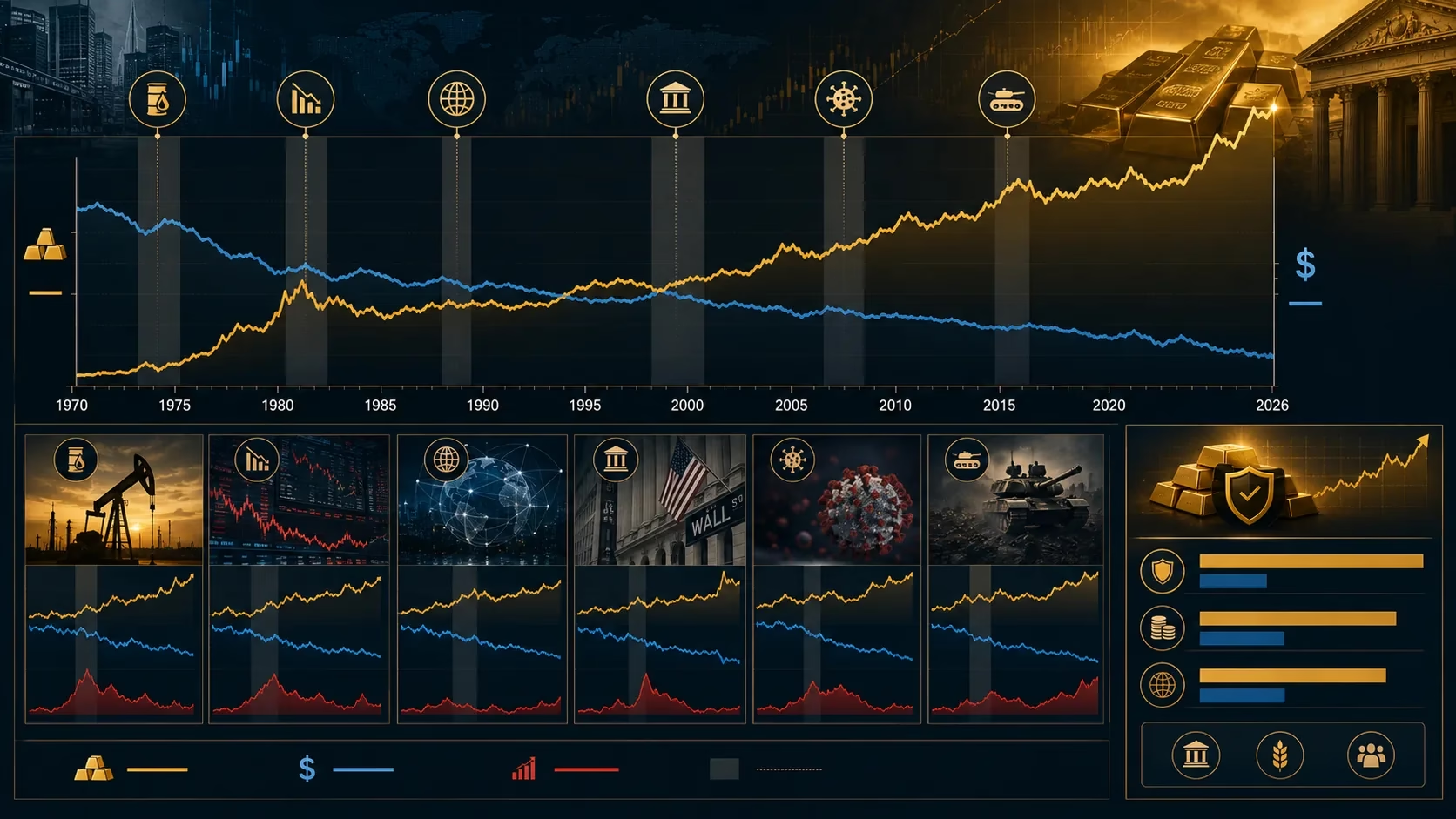
Gold historically regained strength during inflation shocks, recessions, banking crises, and periods of declining confidence in fiat systems.
Why Gold May NOT Replace the Dollar
Balanced analysis matters.
There are still powerful reasons the US dollar likely remains dominant:
- deep Treasury markets
- massive liquidity
- global payment systems
- network effects
- institutional trust
Even critics of dollar dominance acknowledge replacing it entirely would likely take decades, not years.
Gold also generates no yield and remains less practical for modern trade settlement infrastructure.
This makes a complete replacement unlikely in the foreseeable future.
Frequently Asked Questions
Will gold replace the US dollar?
Gold is unlikely to fully replace the US dollar in the near future, but it may increasingly complement reserve systems as countries diversify reserves and reduce concentrated currency exposure.
Why are central banks buying gold?
Central banks increasingly buy gold for reserve diversification, inflation protection, geopolitical neutrality, and reduced foreign counterparty risk.
What is de-dollarization?
De-dollarization refers to efforts by countries to reduce dependence on the US dollar in trade, reserves, and international financial settlements.
Can gold become a reserve currency again?
Most experts expect hybrid reserve systems rather than a return to a strict gold standard, where gold regains greater strategic importance alongside major currencies.
Final Verdict
Understanding Will Gold Replace the US Dollar requires separating sensational predictions from structural reality.
Gold probably will not suddenly overthrow dollar dominance.
But historical trends increasingly suggest a gradual shift toward reserve diversification, where gold becomes more important inside a multi-polar monetary system.
And that possibility helps explain why governments themselves continue buying gold at historically elevated prices despite market volatility. Central banks, investors, and institutions increasingly treat gold as a strategic reserve asset during uncertain times.
Disclaimer
This article is for educational and informational purposes only and should not be considered financial, tax, or investment advice. Monetary systems, reserve assets, and gold prices can evolve significantly over time.

About the Author
Vipin Gandhi writes about gold markets, macroeconomics, inflation, and long-term wealth preservation for Indian and global investors.