Will Gold Hit $5,000 is no longer viewed as an unrealistic question in global financial markets.
Just a few years ago, a $5,000 gold price sounded extreme even to many professional investors.
But after years of inflation shocks, aggressive central-bank buying, geopolitical instability, debt expansion, and global recession fears, several major institutions now openly discuss the possibility of gold reaching or even exceeding $5,000 per ounce.
Importantly, this conversation is not driven only by retail speculation.
Large financial institutions including:
- JP Morgan
- HSBC
- Goldman Sachs
- Deutsche Bank
- UBS
have all published increasingly bullish gold forecasts in recent years.
Will Gold Hit $5,000 Based on Historical Data?
Historically, gold experienced its strongest rallies during periods characterized by:
- inflation crises
- currency weakness
- geopolitical uncertainty
- recessions
- aggressive monetary stimulus
The 1970s inflation era, the 2008 Global Financial Crisis, and the post-pandemic inflation period all triggered powerful gold rallies.
In many cases, gold outperformed traditional financial assets during periods when investors worried about purchasing power and economic stability.
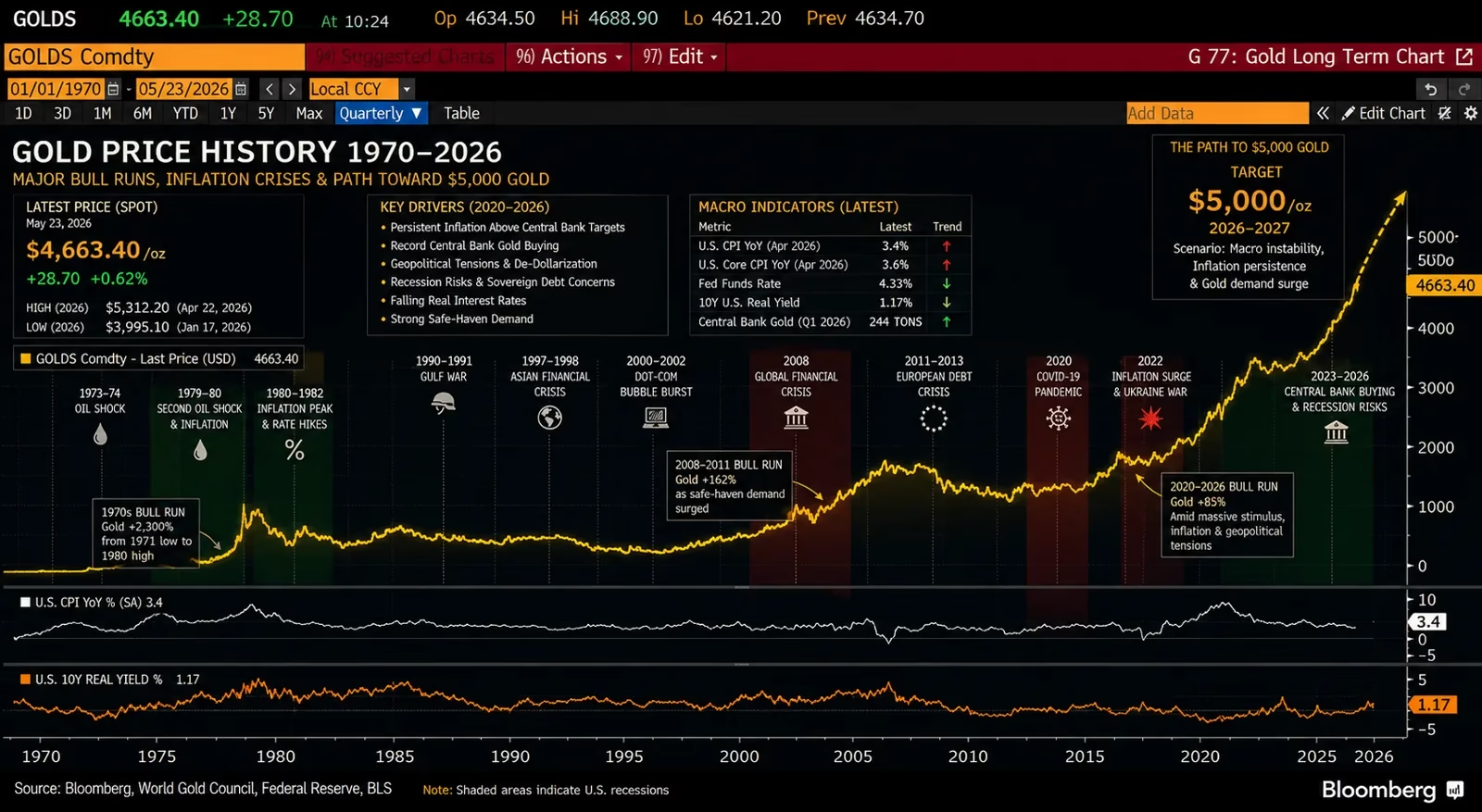
Gold historically experienced its strongest rallies during inflation shocks, recession fears, currency instability, and periods of monetary uncertainty.
Why Experts Believe Gold Could Reach $5,000
Several structural trends are now supporting bullish gold forecasts globally.
One major factor is central-bank gold accumulation.
Governments worldwide purchased record amounts of gold reserves in recent years as concerns around reserve diversification and geopolitical fragmentation increased.
China, India, Poland, Turkey, and multiple emerging-market economies aggressively increased gold reserves.
For many governments, gold increasingly represents:
- monetary independence
- reserve diversification
- inflation protection
- currency-risk reduction
JP Morgan projected gold could approach $5,000 per ounce by late 2026, while some analysts even discussed longer-term scenarios toward $6,000.
HSBC similarly forecasted that gold’s “bull wave” could potentially push prices toward $5,000 because of ongoing safe-haven demand and geopolitical risks.
Central Banks Buying Gold Is Changing the Market
One of the biggest changes in the modern gold market is institutional demand from sovereign central banks.
Historically, central banks preferred:
- US Treasury bonds
- dollar reserves
- yield-generating assets
But recent years dramatically changed reserve-management behaviour.
Countries increasingly want reserve assets that:
- cannot be printed
- carry no foreign counterparty risk
- remain globally liquid
- hold long-term trust
That trend strongly supports long-term gold demand globally.
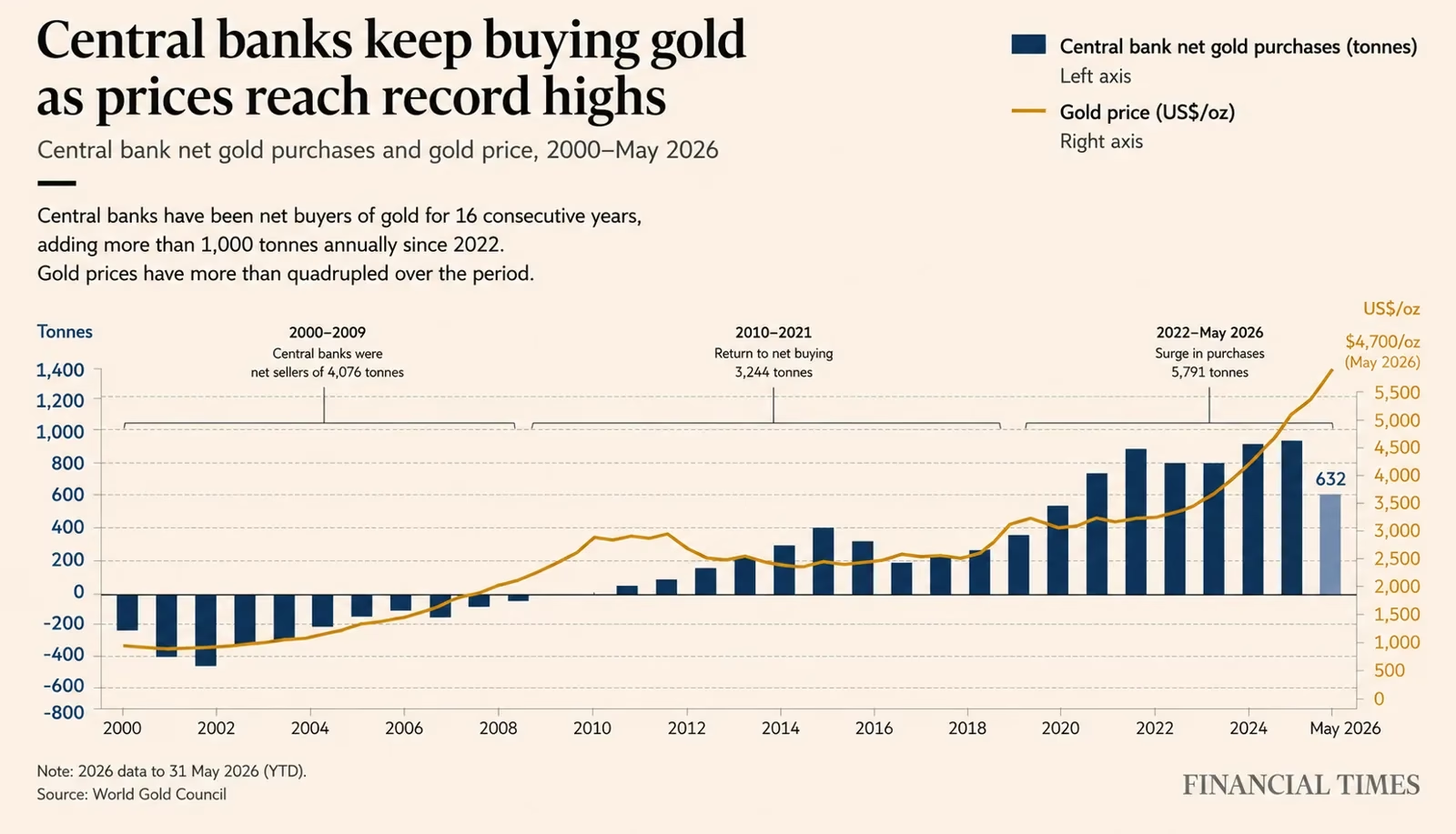
Central-bank demand remained one of the strongest structural drivers supporting higher gold prices globally over the last two decades.
Related: Why Central Banks Are Buying Gold
Gold Inflation Hedge and Currency Debasement Fears
Another major driver behind bullish gold forecasts is inflation.
After the pandemic era, governments globally expanded monetary stimulus aggressively.
Debt surged rapidly.
Money supply expanded dramatically.
Inflation accelerated across major economies.
Gold historically benefited from fears around fiat currency debasement because investors viewed gold as:
- scarce
- globally recognized
- independent from political money creation
This is why many investors continue viewing gold as one of the most important inflation-proof investments during uncertain periods.
Related: How Gold Protects Your Money From Inflation
Will Gold Hit $5,000 During a Global Recession?
Historically, gold often performed strongly during periods of recession and financial stress.
Recessions usually increase:
- safe-haven demand
- fear-driven investing
- central-bank stimulus
- interest-rate cuts
Those conditions frequently create supportive environments for gold.
Major brokerages increasingly expect safe-haven demand, ETF inflows, and geopolitical uncertainty to remain powerful gold drivers throughout the coming years.
However, not all experts fully agree on aggressive upside scenarios.
Some analysts argue that:
- higher real yields
- stronger dollar conditions
- reduced geopolitical tensions
- economic stabilization
could slow gold’s momentum significantly.
Gold vs Stock Market During Economic Fear
One reason gold attracts attention during uncertain periods is its historical relationship with equities.
During many financial crises:
- stock markets struggled
- investor sentiment weakened
- growth expectations collapsed
Gold often behaved differently from equities during those same periods.
| Period | Gold Trend | Economic Environment |
|---|---|---|
| 1970s Inflation Crisis | Explosive rally | High inflation and recession |
| 2008 Financial Crisis | Strong recovery rally | Banking panic and recession |
| 2020 Pandemic | Record highs | Global economic shutdown |
| 2022–2026 Inflation Era | Strong bull market | Inflation and geopolitical tension |
Could Gold Really Reach $5,000?
From a purely mathematical perspective, a move toward $5,000 no longer appears impossible considering recent price behaviour.
Gold already crossed multiple psychological milestones previously considered unrealistic.
Analysts increasingly argue that modern gold markets are behaving differently because of:
- persistent central-bank demand
- geopolitical fragmentation
- global debt expansion
- currency-debasement fears
- structural investor demand
Several macroeconomic forces now appear to be aligning simultaneously in support of higher long-term gold prices.
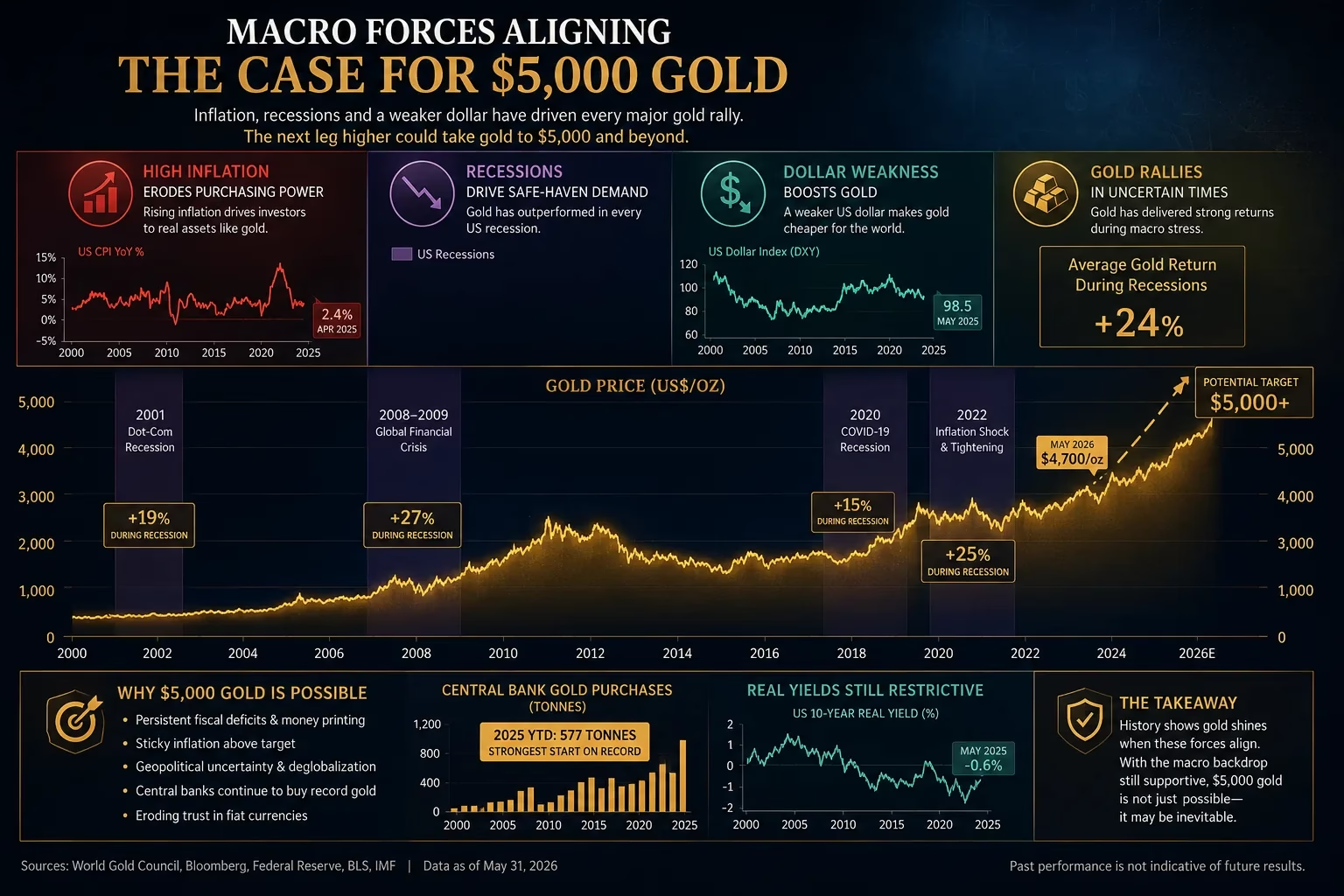
Inflation fears, recession risks, central-bank buying, and geopolitical instability increasingly supported bullish long-term gold forecasts.
Why Some Experts Still Remain Cautious
Not every analyst believes gold will automatically continue rising indefinitely.
Several factors could limit upside:
- higher real interest rates
- stronger US dollar
- reduced geopolitical tension
- economic stabilization
- investor positioning corrections
Historically, gold also experienced significant corrections during long-term bull markets.
That volatility remains important for investors to understand.
Frequently Asked Questions
Will gold hit $5,000 according to experts?
Several major institutions including JP Morgan, HSBC, UBS, and Deutsche Bank discussed scenarios where gold could approach or exceed $5,000 depending on inflation, central-bank demand, and geopolitical conditions.
Why are central banks buying so much gold?
Central banks increasingly buy gold for reserve diversification, inflation protection, and reduced dependence on foreign currencies.
Does inflation increase gold prices?
Historically, inflation fears often supported gold demand because investors viewed gold as protection against declining currency purchasing power.
Can gold outperform stocks during recessions?
Gold historically behaved differently from equities during many recession periods and sometimes outperformed stocks during major financial crises.
Final Verdict
Understanding Will Gold Hit $5,000 ultimately requires understanding why investors buy gold during uncertain periods.
Gold’s biggest strength historically was not simply price appreciation.
Its importance came from representing:
- monetary trust
- scarcity
- safe-haven demand
- purchasing-power protection
- diversification
Over the last several years, inflation shocks, geopolitical instability, recession fears, and aggressive central-bank buying dramatically strengthened the long-term bullish case for gold.
That does not guarantee gold reaches $5,000 immediately.
But historically, periods characterized by monetary uncertainty and declining confidence in traditional financial systems repeatedly created powerful conditions for gold rallies.
Investors closely following institutions like the World Gold Council and JP Morgan Global Research increasingly recognize that modern gold markets are now driven not only by retail investors, but also by sovereign reserve strategy and structural macroeconomic trends.
Disclaimer
This article is for educational and informational purposes only and should not be considered financial, investment, tax, or legal advice. Gold prices and financial markets can change significantly over time. Investors should conduct independent research and consult qualified financial professionals before making investment decisions.

About the Author
Vipin Gandhi is an independent finance writer and market observer focused on gold markets, macroeconomics, inflation trends, and long-term wealth preservation. His work combines investor psychology, historical market analysis, and practical financial insights designed for modern Indian and global investors navigating uncertain economic conditions.