

Every Financial Crisis Since 1970 — And What Happened to Gold reveals something fascinating about investor psychology, economic fear, inflation, and how financial systems behave when confidence begins disappearing.
Across different decades, governments changed, currencies evolved, stock markets expanded globally, and technology transformed finance completely.
But one pattern repeatedly returned during periods of uncertainty:
investors moved toward gold.
Sometimes that movement happened slowly as inflation fears increased.
Sometimes it happened aggressively during panic-driven market collapses.
But throughout inflation shocks, recessions, banking crises, debt crises, stock market crashes, currency instability, and geopolitical stress, gold repeatedly regained attention whenever confidence in traditional financial systems weakened.
Every Financial Crisis Since 1970 — And What Happened to Gold
Understanding gold during financial crises requires understanding what investors actually fear during uncertain periods.
Most investors are not simply worried about prices falling temporarily.
They worry about:
- purchasing power disappearing
- banking instability
- inflation
- currency weakness
- market crashes
- systemic financial stress
Gold historically benefited from those fears because it has long been viewed as a:
- safe haven asset
- store of value
- inflation hedge
- alternative monetary reserve
That does not mean gold always rises instantly during crises.
In severe liquidity panic phases, investors sometimes sell nearly everything — including gold — simply to raise cash quickly.
But historically, gold often regained strength as crises deepened and confidence in financial systems weakened further.
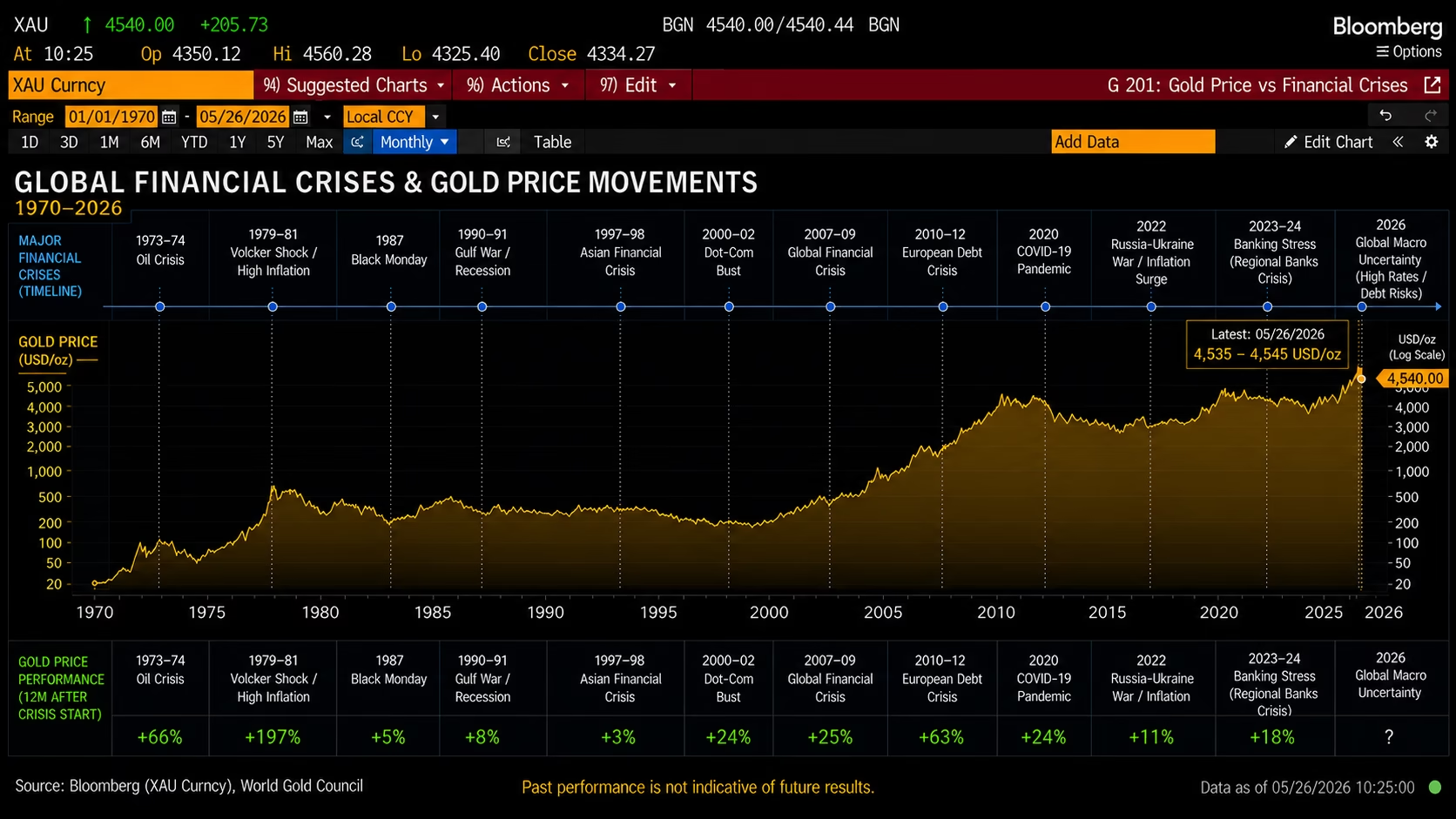
Major financial crises repeatedly triggered renewed investor interest in gold during periods of inflation, recession, banking instability, and stock market stress.
The 1970s Inflation Crisis and Gold’s Historic Rally
The 1970s permanently changed how modern investors viewed gold.
After the collapse of the Bretton Woods monetary system and the end of direct dollar convertibility into gold, inflation accelerated sharply across many economies.
Oil shocks, geopolitical instability, and aggressive monetary expansion created a powerful inflationary environment.
Gold prices surged dramatically during this period.
For many investors, this became one of the strongest historical examples of gold acting as a gold inflation hedge.
People who personally experienced the inflation era of the 1970s often developed a very different psychological relationship with money compared to younger generations.
In India especially, older households frequently viewed physical gold not as speculation, but as long-term family financial protection.
That mindset still strongly influences Indian investment behaviour today.
Related: Gold vs Inflation: What 50 Years of Data Really Reveals
The 1987 Stock Market Crash
The 1987 Black Monday crash shocked investors globally.
Stock markets collapsed rapidly, creating widespread panic across financial systems.
Gold attracted renewed attention during the uncertainty because investors suddenly became more aware of portfolio diversification risks.
Interestingly, this period also strengthened the idea that gold behaves differently from equities during periods of market stress.
That diversification behaviour later became one of the biggest reasons institutional investors continued holding gold allocations.
The Asian Financial Crisis of 1997
The Asian Financial Crisis created severe currency instability across multiple economies.
Currencies collapsed sharply in countries including:
- Thailand
- Indonesia
- South Korea
This period reinforced an important lesson:
currency systems themselves can become vulnerable during financial stress.
Gold regained importance during this era because investors increasingly worried about:
- currency devaluation
- banking instability
- reserve security
For many Asian households, gold ownership was viewed as protection against financial-system uncertainty rather than merely an investment.
The Dot-Com Bubble Crash of 2000
The collapse of internet stocks after the dot-com bubble created another important shift.
During the late 1990s, technology optimism dominated markets aggressively.
Investors heavily concentrated into speculative growth assets.
When the bubble eventually collapsed, trillions in market value disappeared.
Gold gradually regained relevance because investors once again rediscovered the importance of diversification and non-correlated assets.
This period also marked the beginning of a long-term secular gold bull market during the early 2000s.
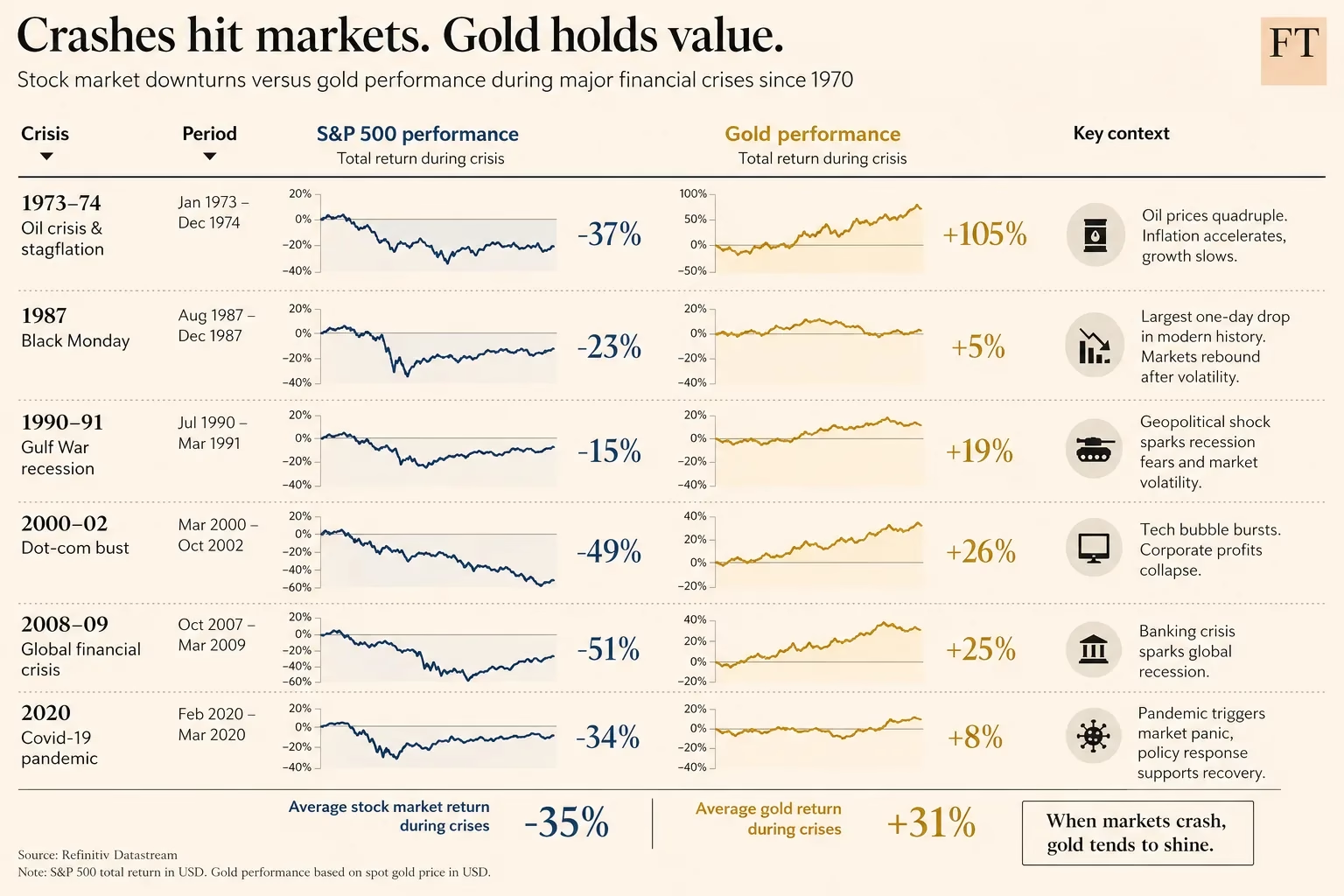
Gold often behaved differently from equities during major financial stress periods, strengthening its reputation as a diversification and defensive asset.
The 2008 Global Financial Crisis
The 2008 financial crisis fundamentally changed global investing psychology.
The collapse of Lehman Brothers triggered fears around:
- banking-system collapse
- credit-market failure
- global recession
- financial contagion
Initially, investors sold many assets aggressively for liquidity — including gold.
But as governments launched massive monetary stimulus and confidence in financial institutions weakened further, gold prices eventually surged strongly.
For many investors, 2008 reinforced gold’s reputation as protection during systemic financial stress.
Many Indian investors who lived through 2008 still remember how quickly confidence disappeared globally.
That experience permanently changed how some households approached diversification and gold ownership.
Related: How Gold Protects Your Money From Inflation
The European Debt Crisis
After 2008, Europe faced sovereign debt concerns involving countries including:
- Greece
- Spain
- Italy
This period increased fears around sovereign debt sustainability and currency-system stability.
Gold continued attracting demand because investors increasingly worried about:
- debt expansion
- currency debasement
- monetary instability
Central banks globally also began reassessing reserve diversification strategies more seriously during this era.
The COVID-19 Crisis
The pandemic created one of the fastest economic shocks in modern history.
Global lockdowns disrupted:
- supply chains
- employment
- consumer activity
- international trade
Governments and central banks responded with unprecedented monetary stimulus.
Interest rates collapsed.
Debt surged.
Money supply expanded dramatically.
Gold prices rallied strongly because investors increasingly worried about:
- inflation
- currency debasement
- long-term monetary stability
This period also introduced many younger investors to gold for the first time.
Prior to 2020, many younger market participants viewed gold as old-fashioned compared to technology stocks or cryptocurrencies.
The pandemic changed that perception significantly.
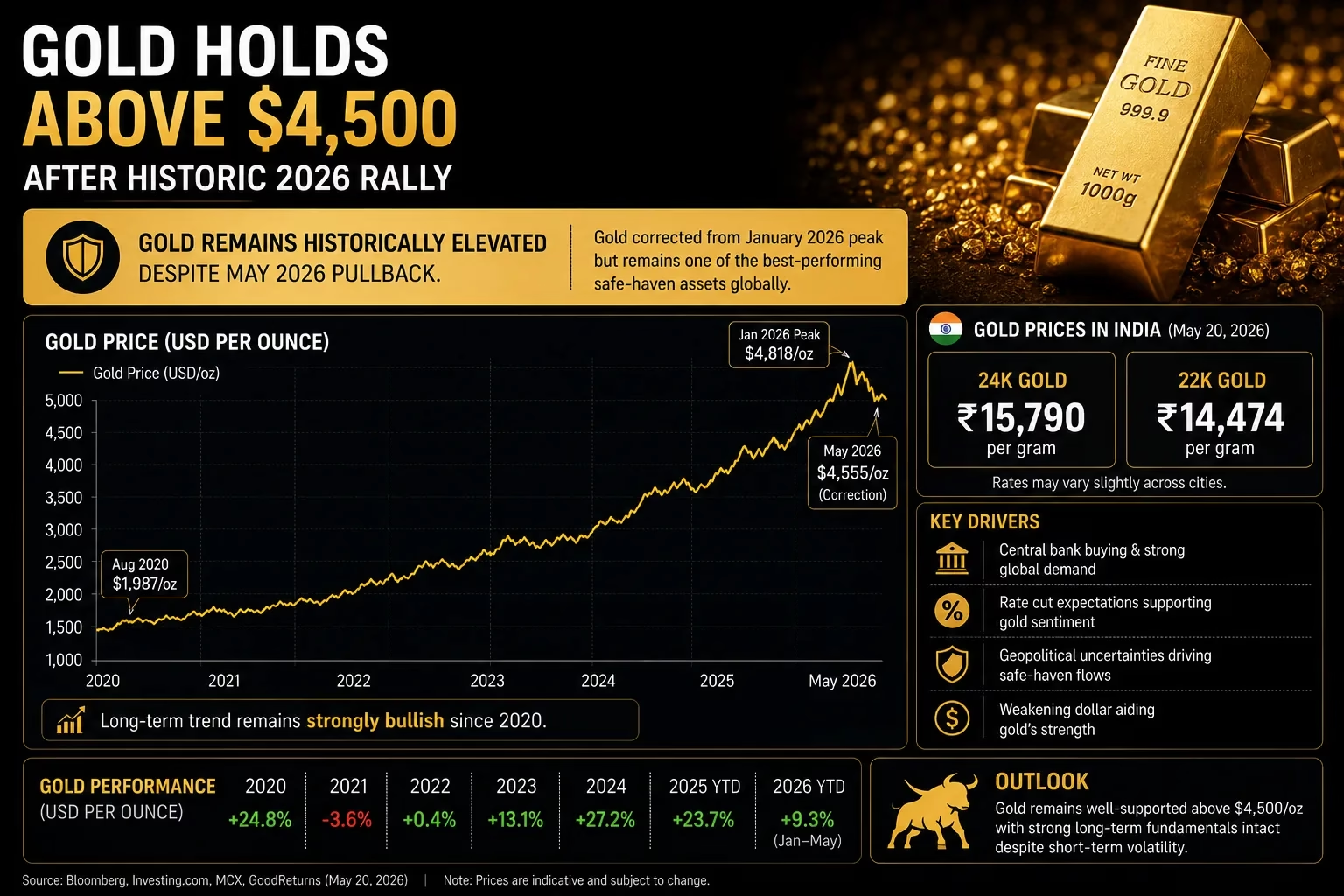
Gold historically regained momentum during periods of inflation pressure, monetary instability, recession fears, and global financial uncertainty.
The 2022–2026 Inflation and Geopolitical Era
The years after the pandemic created another major turning point.
Inflation accelerated globally.
Central banks raised interest rates aggressively.
Geopolitical tensions intensified.
At the same time, governments around the world began buying gold reserves aggressively again.
This trend reinforced gold’s importance not only for retail investors, but also for sovereign reserve systems.
Related: Why Central Banks Are Buying Gold
What Financial Crises Reveal About Gold
When viewed across multiple decades, one pattern becomes clear:
gold repeatedly regained attention during periods when trust in traditional financial systems weakened.
That does not mean gold always outperformed every asset.
Nor does it mean gold rose instantly during every crisis.
But financial crises consistently reminded investors why diversification matters.
Gold’s biggest historical strength may not be maximum returns.
Its real value often appeared during periods characterized by:
- economic fear
- currency instability
- inflation pressure
- banking stress
- geopolitical uncertainty
Frequently Asked Questions
Does gold always rise during financial crises?
No. During severe liquidity panic, investors sometimes initially sell gold along with other assets. However, gold historically regained strength during deeper periods of monetary or financial uncertainty.
Why is gold considered a safe haven asset?
Gold is viewed as a safe haven asset because investors historically turned toward gold during inflation, recessions, banking instability, and currency weakness.
How did gold perform during the 2008 financial crisis?
Gold initially faced volatility during the liquidity panic of 2008 but later rallied strongly as monetary stimulus increased and confidence in financial systems weakened.
Why do Indian households trust gold during crises?
Many Indian families historically viewed physical gold as long-term financial security during inflation, economic uncertainty, and currency instability.
Final Verdict
Understanding Every Financial Crisis Since 1970 — And What Happened to Gold ultimately reveals more than just price movements.
It reveals how investors behave when trust becomes uncertain.
Across different generations, crises repeatedly changed how people thought about:
- money
- inflation
- currencies
- banks
- financial security
And throughout those periods, gold repeatedly regained relevance because it represented something psychologically powerful:
- stability
- scarcity
- historical trust
- purchasing-power protection
That is why gold continues remaining relevant even after decades of financial innovation, digital investing, and evolving global markets.
Investors closely following macroeconomic trends through institutions like the Reserve Bank of India and the World Gold Council increasingly recognize the long-term importance of diversification and financial resilience.
Disclaimer
This article is for educational and informational purposes only and should not be considered financial, investment, tax, or legal advice. Gold prices, economic conditions, and financial markets can change over time. Investors should conduct independent research and consult qualified financial professionals before making investment decisions.

About the Author
Vipin Gandhi is an independent finance writer and market observer focused on gold markets, macroeconomics, inflation trends, and long-term wealth preservation. His work combines investor psychology, historical market analysis, and practical financial insights designed for modern Indian and global investors navigating uncertain economic conditions.