

Why Central Banks Are Buying Gold has become one of the most important questions in global finance in 2026.
Why Central Banks Are Buying Gold is no longer just a discussion for economists or institutional investors. Governments across the world are rapidly increasing gold reserves because of inflation concerns, geopolitical fragmentation, reserve diversification, fiat currency debasement fears, and growing uncertainty around long-term monetary stability.
For decades, many policymakers believed modern reserve systems would continue relying primarily on:
- US Treasury bonds
- dollar reserves
- yield-generating sovereign assets
But the global financial system is changing rapidly.
Central banks around the world are now accumulating gold at some of the fastest rates seen in modern history.
And importantly, central banks buying gold is no longer limited to a few small economies.
Countries including:
- China
- India
- Poland
- Turkey
- Kazakhstan
- Uzbekistan
have all significantly increased gold reserves in recent years.
Global central banks purchased more gold in the last four years than during any comparable period since the collapse of the Bretton Woods monetary system.
Why Central Banks Are Buying Gold in 2026
According to the World Gold Council , central bank gold demand remained historically strong through 2025 and into 2026.
That level of demand is extraordinary compared to historical averages before 2022.
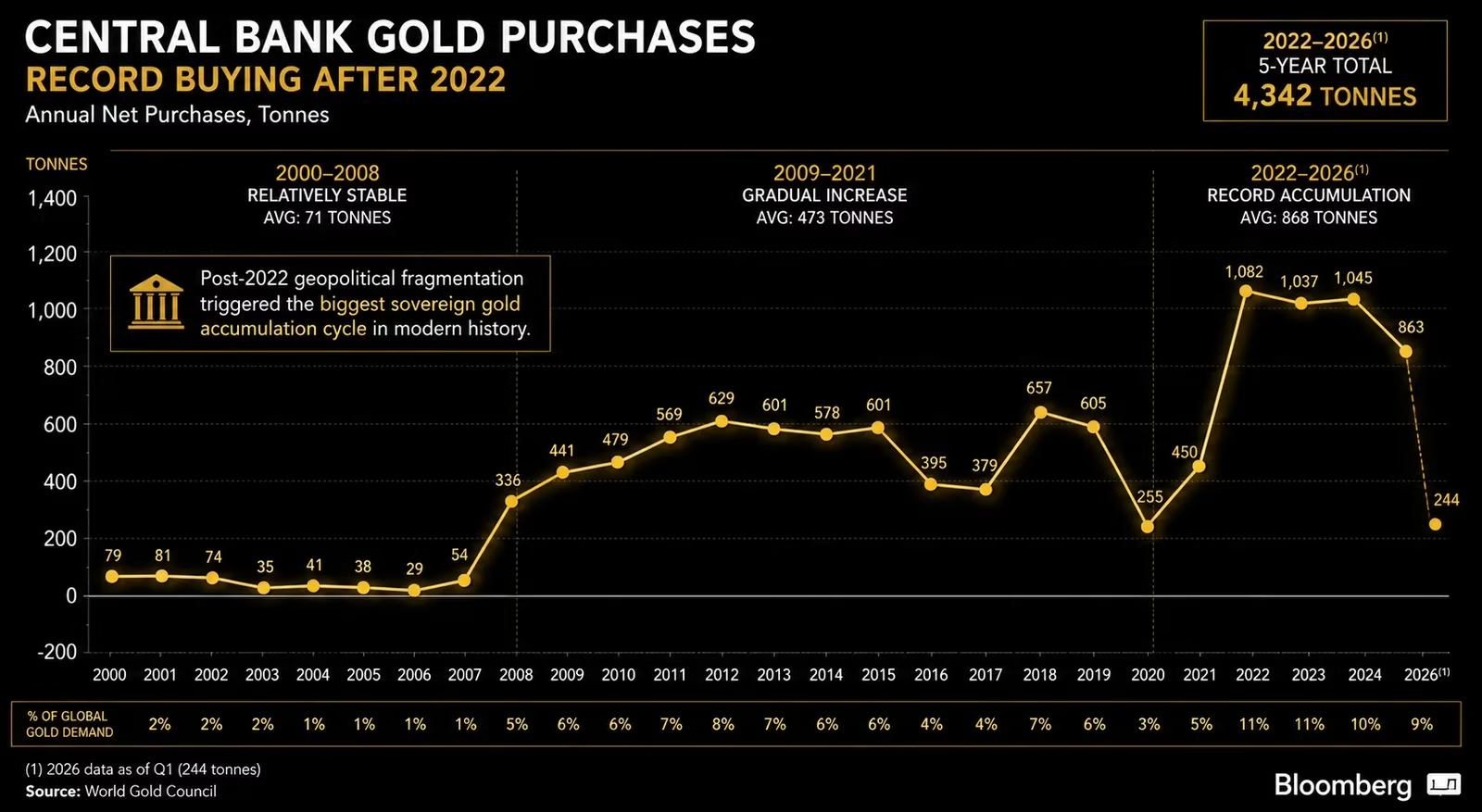
Central banks buying gold accelerated sharply after 2022 as geopolitical uncertainty and reserve diversification concerns increased globally.
Central banks are not short-term traders reacting emotionally to market momentum.
Their reserve decisions are usually based on:
- long-term monetary stability
- reserve diversification
- currency resilience
- geopolitical protection
When governments continue accumulating gold despite historically high prices, it signals that the motivation goes far beyond speculation.
This is one reason many analysts now believe central banks buying gold has become one of the most important structural trends shaping the modern gold market.
Why Central Banks Are Buying Gold During Geopolitical Uncertainty
One major reason why central banks are buying gold is geopolitical fragmentation.
For decades after the Cold War, global finance operated under relatively stable assumptions:
- the US dollar dominated reserves
- Treasury bonds were considered safest
- global trade remained deeply interconnected
But over the last several years, geopolitical tensions intensified significantly.
Conflicts involving:
- Russia and Ukraine
- US-China tensions
- Middle East instability
- trade fragmentation
have forced many governments to rethink reserve-management strategies.
The freezing of Russian foreign reserves after 2022 particularly changed how many countries think about sovereign reserve security.
For many emerging-market central banks, gold increasingly appears attractive because:
- it carries no foreign counterparty risk
- it cannot be frozen by another government
- it cannot be printed by another country
- it exists outside direct political control
This broader concern about reserve protection is one major reason central banks are buying gold aggressively today.
Why Central Banks Are Buying Gold as a Safe Haven Asset
Historically, gold functioned as a safe haven asset during periods of:
- financial instability
- currency weakness
- inflation pressure
- economic fear
That historical role is becoming increasingly important again.
Central banks themselves are effectively acknowledging that modern financial systems remain vulnerable to:
- debt expansion
- inflation shocks
- currency volatility
- geopolitical disruption
Gold’s appeal in this environment comes from its independence.
Unlike fiat currencies, gold cannot be created through monetary policy decisions.
That distinction becomes especially important during periods of aggressive money printing or long-term debt expansion.
Why Central Banks Are Buying Gold During Inflation Concerns
Another major reason why central banks are buying gold is concern about fiat currency debasement.
After the pandemic era, governments and central banks globally expanded monetary stimulus aggressively.
Debt levels surged.
Money supply expanded rapidly.
Inflation accelerated across many economies.
Even though inflation moderated in some regions, long-term concerns about monetary stability remain elevated.
Gold benefits psychologically from these fears because it is viewed as:
- scarce
- globally recognized
- independent from political money creation
This is one reason governments continue viewing gold as a gold inflation hedge.
Related: Gold vs Inflation: What 50 Years of Data Really Reveals
Why Central Banks Are Buying Gold Instead of Increasing Dollar Reserves
For decades, the US dollar dominated global reserves overwhelmingly.
But reserve diversification is gradually increasing.
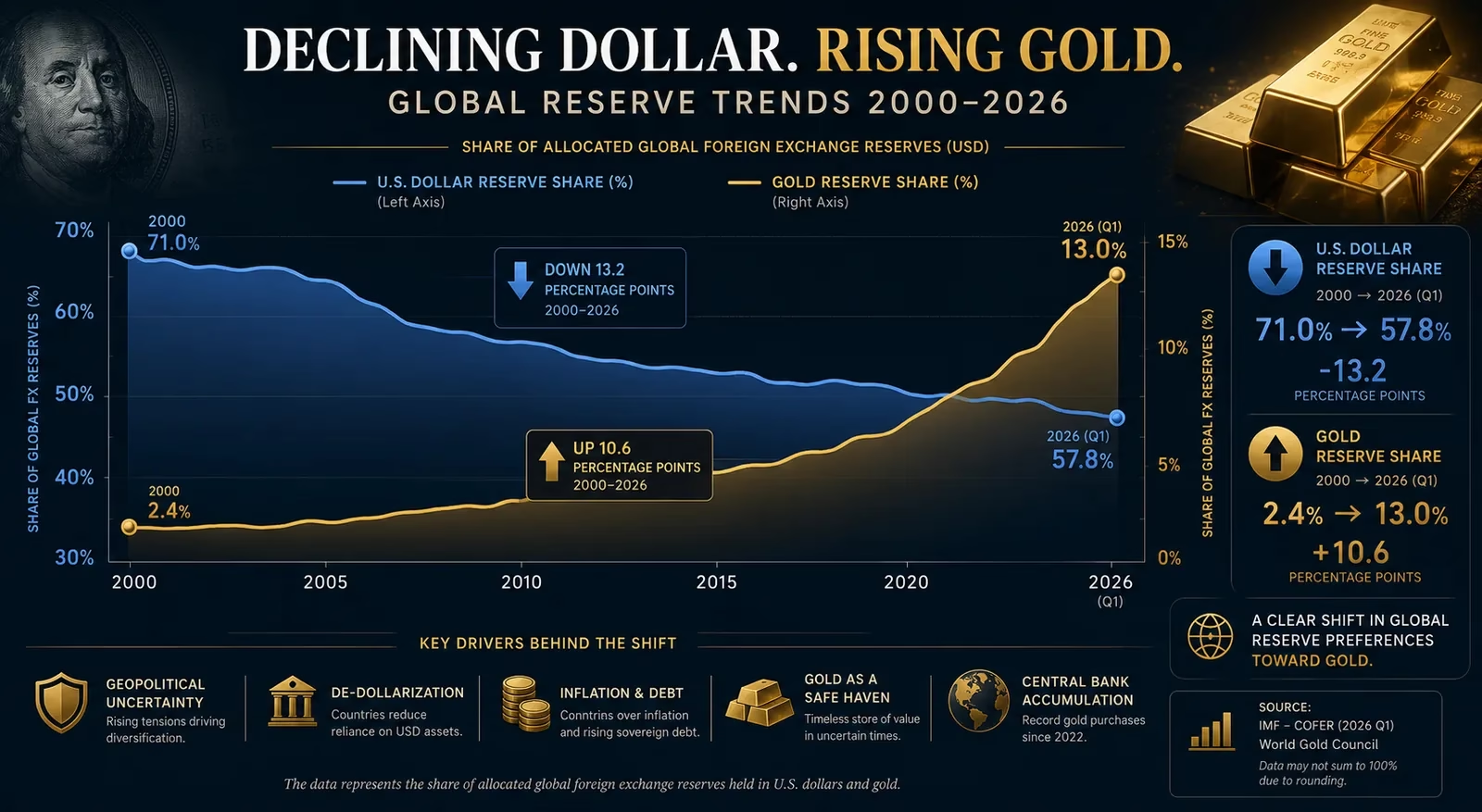
Many central banks are slowly diversifying reserves away from heavy dollar concentration while increasing gold allocations.
This does not mean the dollar suddenly disappears as the dominant reserve currency.
But it does suggest countries increasingly want:
- reserve diversification
- reduced geopolitical exposure
- alternative reserve assets
Gold naturally fits that objective because it is universally recognized and highly liquid globally.
For many policymakers, gold also acts as long-term protection against monetary instability and global financial fragmentation.
Why Emerging Markets Are Leading Central Banks Buying Gold
One fascinating trend is that many of the largest buyers are emerging-market central banks.
Countries including:
- Poland
- China
- India
- Uzbekistan
- Kazakhstan
have all increased reserves aggressively.
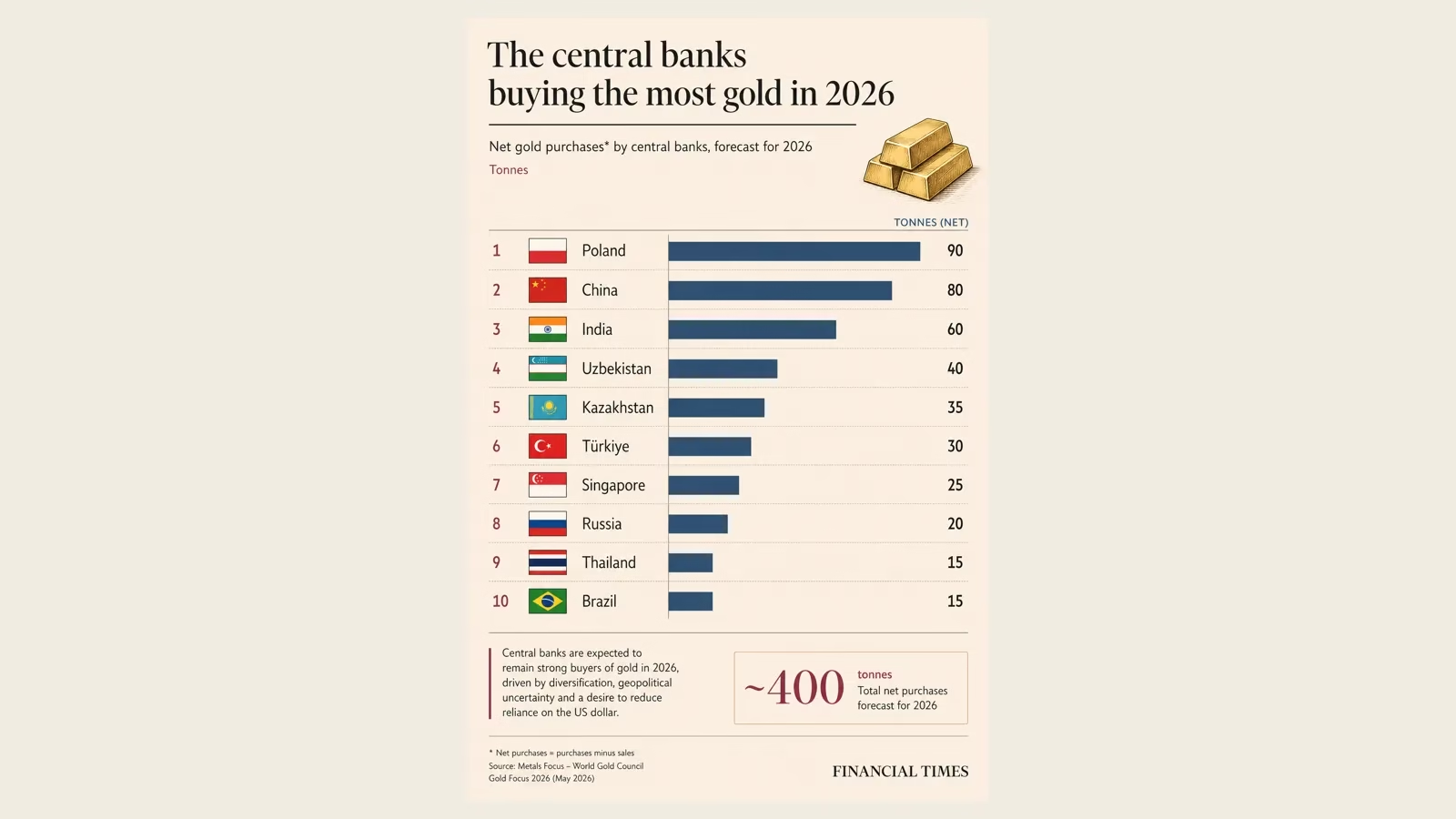
Emerging-market central banks became the largest contributors to global gold demand growth in 2026.
| Country | Why Buying Gold |
|---|---|
| China | Reserve diversification and geopolitical security |
| India | Inflation hedge and reserve strengthening |
| Poland | Economic stability and reserve protection |
| Kazakhstan | Commodity reserve diversification |
Emerging-market economies often face greater sensitivity to:
- currency volatility
- dollar dependence
- external debt risk
- capital-flow instability
Gold reserves can help strengthen confidence in sovereign balance sheets during uncertain periods.
Why Central Banks Are Buying Gold Despite Record Prices
One especially interesting detail is that central banks continue buying despite historically high gold prices.
Normally, rising prices discourage aggressive institutional accumulation.
But in this case, demand remains remarkably resilient.
That suggests governments are prioritizing:
- strategic reserve security
- long-term diversification
- inflation resilience
- geopolitical protection
over short-term price sensitivity.
This behaviour strongly reinforces the idea that gold is increasingly viewed as a strategic reserve asset rather than a speculative trade.
How Central Banks Buying Gold Impacts Investors
When central banks accumulate gold aggressively, retail investors often interpret it as a long-term confidence signal.
Many investors reason:
“If governments themselves are increasing gold exposure, perhaps gold still matters more than modern finance once believed.”
That psychology partly explains rising retail interest globally in:
- Gold ETFs
- physical gold
- Sovereign Gold Bonds
- digital gold exposure
Related: Why Smart Investors Are Moving to Gold ETFs in 2026
Frequently Asked Questions About Why Central Banks Are Buying Gold
Why are central banks buying more gold in 2026?
Central banks are increasing gold reserves because of inflation concerns, geopolitical tensions, reserve diversification, and fears around long-term fiat currency debasement.
Which countries are buying the most gold?
China, Poland, India, Kazakhstan, Turkey, and Uzbekistan are among the largest central bank gold buyers globally.
Does central bank gold buying increase gold prices?
Large institutional demand from central banks can support long-term gold prices because it reduces available supply and strengthens investor confidence in gold as a reserve asset.
Why is gold considered a safe haven asset?
Gold is considered a safe haven asset because investors historically moved toward gold during inflation, recessions, currency weakness, and financial uncertainty.
Gold Is Not a Perfect Asset Either
Balanced analysis also requires acknowledging gold’s limitations.
Gold does not generate:
- corporate earnings
- cash flows
- business productivity
Over extremely long periods, productive businesses may outperform gold substantially.
Gold prices can also remain volatile depending on:
- interest-rate cycles
- currency movements
- investor sentiment
- global liquidity conditions
That is why sophisticated investors and central banks generally treat gold as:
- a reserve stabilizer
- a diversification asset
- a defensive allocation
rather than a complete financial strategy.
Final Verdict on Why Central Banks Are Buying Gold
Understanding Why Central Banks Are Buying Gold ultimately requires understanding how governments think about long-term financial security.
Central banks are not buying gold because they expect instant profits.
They are buying gold because gold still offers something extremely rare in modern finance:
- monetary independence
- reserve diversification
- liquidity
- global trust
In a world increasingly shaped by:
- geopolitical tension
- inflation uncertainty
- debt expansion
- currency fragmentation
gold continues regaining importance not only for investors, but for nations themselves.
Investors closely following macroeconomic policy through institutions like the Reserve Bank of India increasingly recognize the importance of diversification, reserve protection, and long-term monetary resilience.
And that may ultimately be the strongest long-term signal of all.
Disclaimer
This article is for educational and informational purposes only and should not be considered financial, investment, tax, or legal advice. Gold prices, reserve policies, and macroeconomic conditions can change over time. Investors should conduct independent research and consult a qualified financial advisor before making investment decisions.

About the Author
Vipin Gandhi is an independent finance writer and market observer focused on Indian investing trends, gold markets, macroeconomics, inflation, and long-term wealth preservation. His work combines investor psychology, global monetary analysis, and practical financial insights designed for modern Indian investors navigating uncertain economic conditions.