
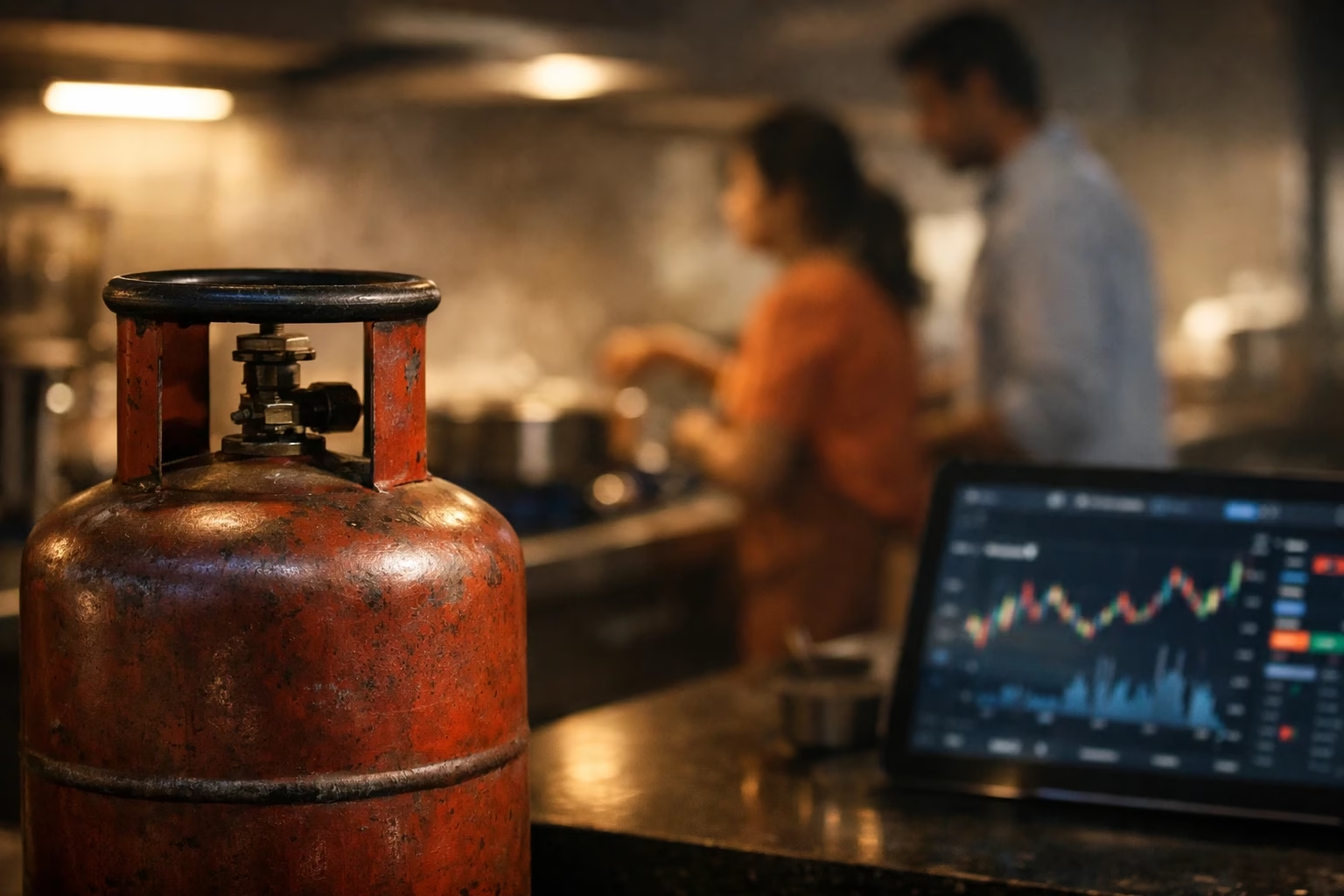
LPG price hike India: Domestic cooking gas prices rise by ₹60. See latest LPG rates, reasons behind the increase, and impact on households.
Introduction
India’s household budgets are set to face additional pressure after a fresh LPG price hike India announcement increased domestic cooking gas prices by ₹60 per cylinder. The increase, which affects millions of households across the country, comes amid volatile global energy markets and rising supply costs.
Domestic LPG cylinders are widely used for cooking in urban and rural homes, making the latest price revision a significant development for consumers already dealing with inflation in food and fuel.
The new pricing structure took effect immediately across major cities, according to data released by oil marketing companies.
Latest Update
Following the LPG price hike India, domestic cylinder prices have been revised across major metro cities.
| City | LPG Price |
|---|---|
| Delhi | ₹973 |
| Mumbai | ₹972 |
| Chennai | ₹989 |
| Kolkata | ₹992 |
Prices may vary slightly depending on local taxes and distribution costs.
The latest revision marks one of the most noticeable increases in recent months, raising concerns among middle-class families and small businesses that rely heavily on LPG.
Why This Happened
Energy analysts say the LPG price hike India is primarily driven by a combination of global and domestic factors.
1. Rising Global Energy Prices
International LPG benchmarks have increased due to tighter global supply and geopolitical tensions affecting energy trade routes.
2. Currency Movements
Fluctuations in the Indian rupee against the US dollar have also increased import costs, since most LPG supplies are purchased in dollars.
3. Subsidy Adjustments
Experts note that gradual subsidy reductions in recent years have made domestic prices more sensitive to global market changes.
These combined factors have pushed oil marketing companies to revise retail LPG prices upward.
Impact on Consumers
The LPG price hike India could have a noticeable impact on household expenses, particularly for middle-income families.
For a household using one cylinder per month, the annual cooking gas expense may rise by ₹720 or more.
The increase may also indirectly influence:
Restaurant operating costs
Small food businesses
Catering services
Inflation in cooked food prices
Consumers are increasingly monitoring fuel costs alongside other essentials like petrol, diesel, and electricity.
Global Market Context
Energy markets worldwide remain volatile due to geopolitical tensions and supply chain disruptions.
Recent developments in crude oil markets have also influenced LPG pricing trends. Energy analysts say that movements in crude and gas markets are closely connected.
For example, geopolitical developments affecting oil supply recently pushed energy markets higher. You can read more about this in Ecobeko’s report on oil prices surge amid global tensions.
At the same time, investors often track commodity trends such as gold alongside fuel markets. Ecobeko’s gold price today in India coverage explains how global economic uncertainty influences commodity prices.
To understand deeper market mechanics, readers can also explore why gold prices change in India and how global economics affect domestic markets.
Market Outlook
Analysts believe the trajectory of LPG prices will depend largely on global energy market conditions.
If crude oil and LPG benchmark prices remain elevated, additional revisions cannot be ruled out in the coming months.
However, if global energy supply stabilizes and the rupee strengthens, domestic LPG prices could moderate.
For now, households may need to factor in higher cooking gas costs as part of their monthly budget planning.
The LPG price hike India highlights how global energy markets increasingly influence domestic household expenses.
Sources: iocl, government data, financial analysts, global commodity market reports.

Vipin Gandhi
Founder & Editor-in-Chief — Ecobeko
Vipin Gandhi is a financial markets and global economy analyst covering gold prices, oil markets, LPG price changes, inflation, commodities, and consumer finance. He reports on economic developments that affect households, investors, and businesses.
His work focuses on explaining complex financial news in a clear and practical way so readers can better understand global market trends and their impact on everyday life.
"18 per cent year on year increase in visits to its airport lounges and travel experiences across apac between january and november 2025, compared to the same period last year."
— abroadstory.blog